Technology · Explainer · · Mirror News Today
Heat Pumps Explained: Efficiency Starts With the Home
Heat pumps move heat rather than simply making it. A useful installation still depends on sizing, local conditions and a clear operating plan.
Written with AI assistance using the primary sources below. Recommendations are analysis; examples are hypothetical.
How a heat pump uses electricity
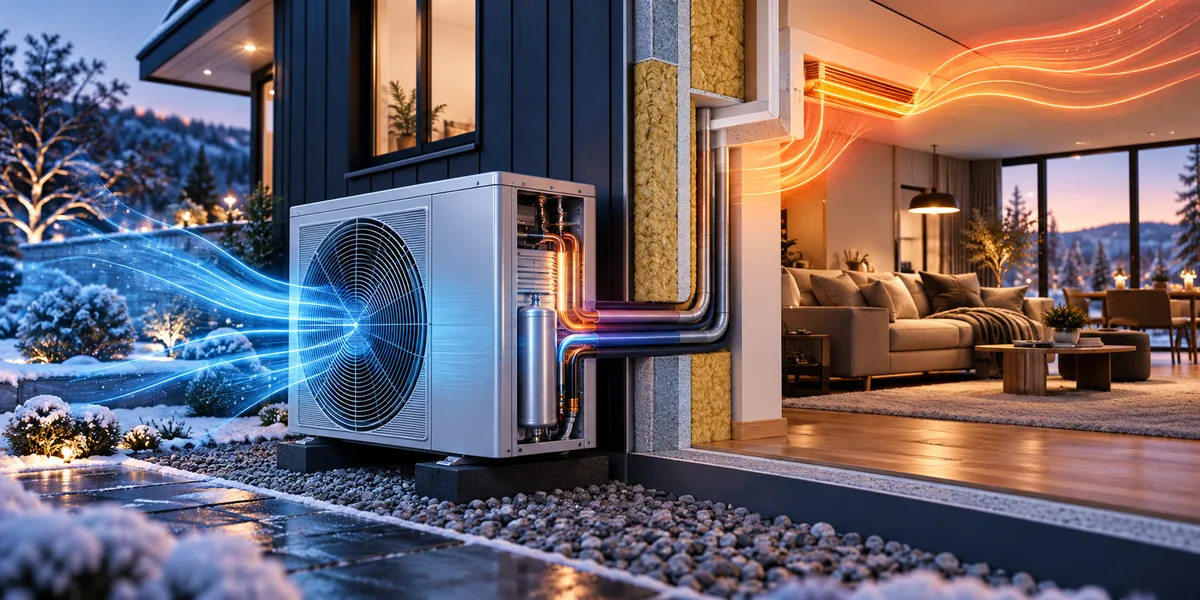
A heat pump transfers heat between places. The International Energy Agency explains that its refrigerant cycle collects heat from an external source and delivers it indoors. Depending on the system, it can also cool a building. Electricity powers the transfer.
Moving heat allows a heat pump to deliver more heat energy than the electrical energy it consumes. Actual performance varies with the source temperature, required indoor temperature and system design. A figure in a brochure needs those conditions attached before you can judge what it means for your home.
Ask how the installer assessed your home
An assessment should consider which rooms you use, the comfort you need and the building's condition. Ask how the installer calculated heating and cooling loads. Matching the capacity of the old appliance can carry forward assumptions that deserve another look.
Two homes of the same size could have different sun exposure, air leakage or room use. Floor area alone would miss those differences. The written proposal should describe the assessment and identify any building improvements assumed in the performance estimate.
Compare energy use and bills separately
As the IEA explains, heat pumps provide heating, and many also provide cooling. What they cost to run depends on energy prices and the equipment being replaced. A reduction in energy use will not necessarily produce the same percentage reduction in spending.
Ask for the tariff, estimated annual use and backup-heating assumptions in each quote. Requesting a range of running costs makes the uncertainty visible. Use the same assumptions when comparing proposals so that a low estimate does not simply reflect a different electricity price.
Get the installation details in writing
Check the proposed positions of indoor and outdoor equipment, access for servicing and the work included in the price. Ask how heating and cooling will reach the rooms you use. Equipment specifications alone cannot answer those installation questions.
The installer should explain operation during unusually hot or cold conditions, including anything you would need to do. The answer depends on the equipment and local climate. Ask them to explain the limits of their proposed design and whether it needs backup heating.
Include commissioning and support in the quote
Agree on how operation will be checked after installation, how you will learn the controls and which settings will be documented. Find out who handles questions after the first season of use.
Compare the full proposal: equipment, building assumptions, installation work, estimated running costs and support. You should be able to understand how the promised performance applies to the home you actually live in.
Main points
- Heat pumps transfer heat using a refrigerant cycle.
- Equipment efficiency and the final energy bill are different measures.
- Compare an installation plan for your home rather than a generic savings claim.
Common questions
Can a heat pump cool a home too?
Many systems can. Check which functions the quoted model and installation include.
Will the same heat pump have the same running cost in two homes?
Building demand, climate, settings and energy tariffs can all change the cost.
What details belong in a quote?
Ask for load assumptions, included work, equipment locations, operating conditions, commissioning and support arrangements.